

‘Hood Warfare 2’ Explained: The Viral $6 ‘Call Of Duty’-Style Shooter Drawing Accusations Of Racism
 by uGames Editors
A low-budget indie shooter has become one of the most talked-about games online this month, and one of the most divisive.
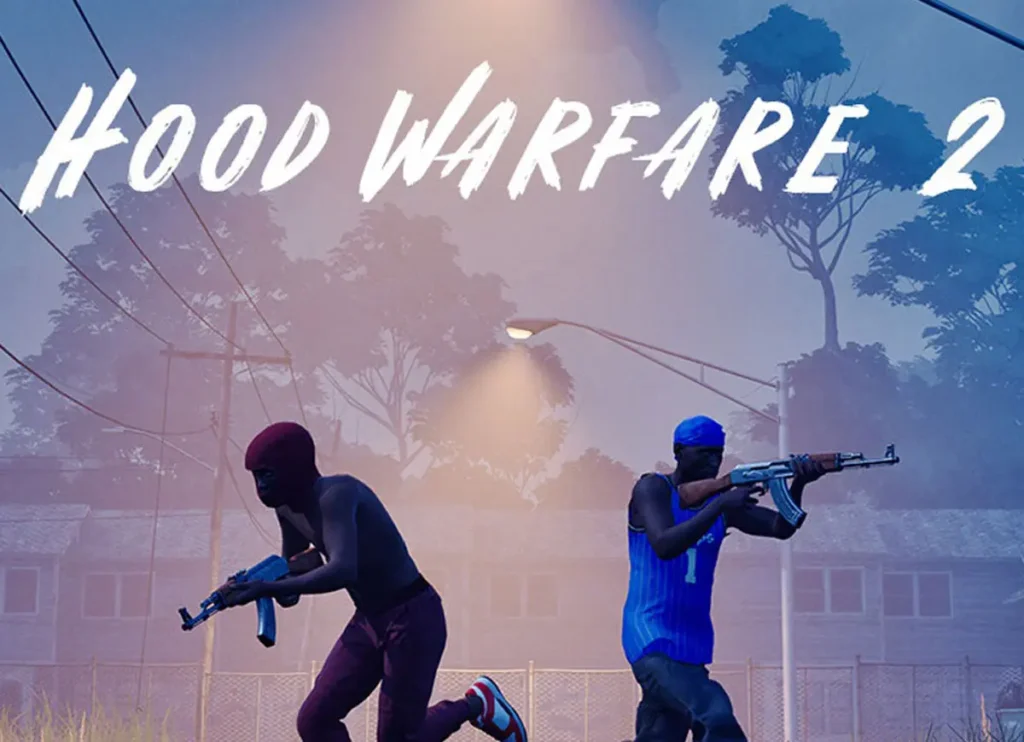
Hood Warfare 2, a Call of Duty-style multiplayer first-person shooter set in Chicago, launched on Steam on Thursday, Oct. 8, for $5.99. It quickly trended on the platform, peaking at more than 11,700 concurrent players over 24 hours. That is a remarkable showing for a game released with almost no promotion.
Hood Warfare 2 Racism Charges
Built in Unreal Engine 5, Hood Warfare 2 pits rival gangs against each other in a fight for turf control across the streets, suburbs, downtown and shopping malls of a fictional Chicago.
The game borrows heavily from Call of Duty: Modern Warfare, including create-a-class loadouts, killstreaks and a familiar heads-up display. The game renames shooter staples: team deathmatch is GangBang, capture the flag is Hit a Lick, bomb defusal is Destroy the Block, and kill-confirmed is Chain Snatch. A Turf War mode and a free-for-all round out the lineup. Killstreaks swap military hardware for street equivalents: snitches spot enemies on the map instead of a UAV, and drive-by shootings replace air strikes.
Who Made It?
Trapstar Games, a small studio that operates mostly through a YouTube channel and its Steam pages, made the game. Little else is known about its developers.
Trapstar’s first game, the Detroit-set Hood Warfare, was released in early access in 2023 and peaked at just 68 concurrent players on Steam. Its Steam page included a disclaimer stating that neither the game nor the studio promotes or condones real-life gang violence.
The sequel took off largely thanks to content creators and streamers, including the comedy group RDC World, who shared clips of its exaggerated characters and dialogue.
Why Is It Controversial?
The game’s rise has drawn heavy criticism. Detractors argue it reduces black communities in Chicago to gang violence and profits from real-life tragedies, pointing to its voice lines, weapon names and premise as relying on racist stereotypes.
Critics also say the game feeds a long-running narrative that Chicago is one of the country’s most dangerous cities, noting that it ranks outside the top 10 on U.S. News & World Report‘s list of places with the highest crime risk despite being the nation’s third-largest city. Others observed that the trailer uses almost none of Chicago’s actual slang.
Online speculation has gone further, including unverified accusations that the developers relied on AI “vibe coding,” that the buzz was astroturfed, and even that the game is a “CIA psyop.”
Defenders say the game isn’t meant to be taken seriously and compare it to franchises like Grand Theft Auto and Def Jam. Critics counter that the comparison is a false equivalence, arguing that those games, while controversial in their own right, offer far more nuance.
On Steam, user reviews have been more favorable, with the game holding a “Mostly Positive” rating, though some players have complained about rampant spawn camping.
About Author