


Gaming Studio House House Admits Using AI ‘Sparingly’ On ‘Big Walk’ Amid Indie Awards Debate
 by uGames Editors
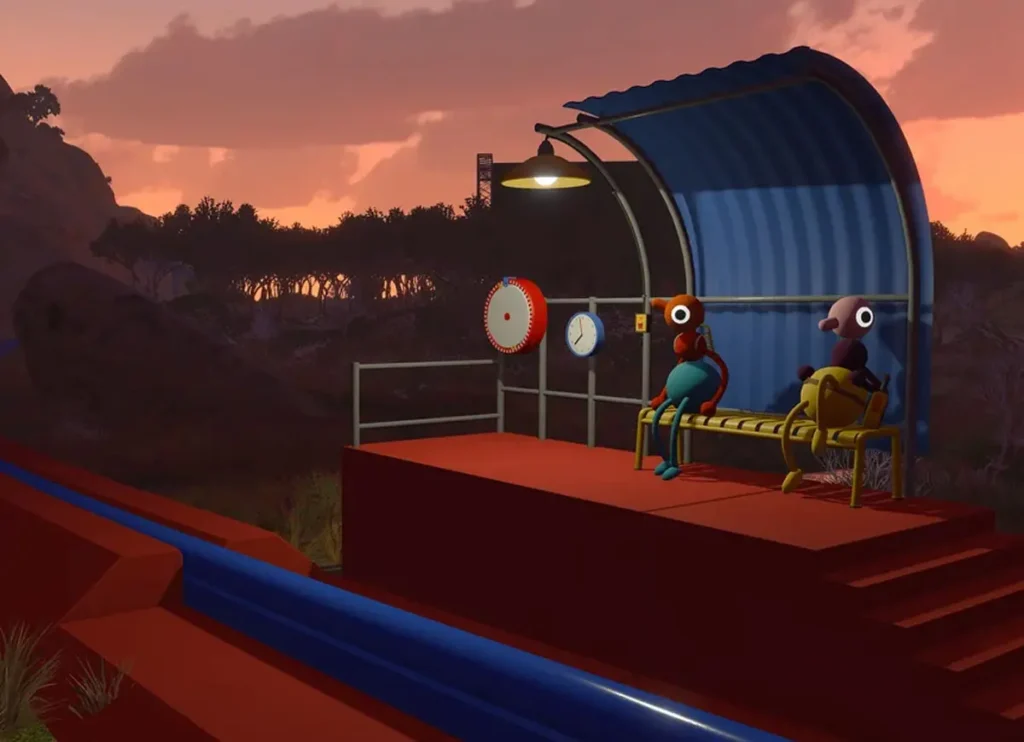
'Big Walk' (Image: House House)
House House, the Australian indie studio behind Untitled Goose Game, has admitted that it used AI tools during the final stretch of development on its latest hit, Big Walk, following a growing debate among judges of a major indie game award.
The Melbourne-based developer posted the disclosure on the game’s FAQ page after jurors for the Independent Games Festival (IGF) said they would not vote for games made using generative AI.
“In the final stretch of Big Walk’s development, LLMs were used sparingly by House House to help work through difficult technical challenges and bugs,” the studio wrote.
According to House House, it used AI chatbots mainly to research technical problems involving third-party code. In a few cases, developers adapted snippets from chatbot responses into working code.
The studio estimated that “well under 0.1%” of Big Walk‘s code was connected to that process, and said generative AI was not used anywhere else in the game’s production.
House House gave one example: a stubborn bug involving shadows in the Unity game engine. The engine’s tools didn’t let the team cull shadows based on their distance from the camera in every direction, so shadows behind the player were being rendered at an infinite distance. After other attempts failed, the team asked an AI chatbot. A heavily modified version of its suggestion eventually produced a working fix of about 10 lines of code.
The studio stressed that its disclosure should not be read as support for AI.
“This is not an endorsement of, or argument for, the use of AI tools, however minimal,” House House wrote. The studio also said it worries that voluntary disclosures like its own “might contribute to the normalization of this technology.”
“We support the work of those who are trying to limit the harm generative AI is doing to video games and our world, and apologize that Big Walk’s LLM usage may not meet their standards,” the statement continued.
House House admitted it had no internal AI policy while making Big Walk, calling that a “failure,” and said it would create a more comprehensive policy for future projects.
The controversy began over the weekend when writer and podcast host Austin Walker shared a statement from IGF jurors on Bluesky. The jurors said they had seen a “significant increase” in the number of submitted games developed with generative AI tools, leading to intense disagreement among judges about how to respond.
The jurors’ statement did not name any specific games. However, social media users quickly speculated that Big Walk was at the center of the debate, after reports that House House had disclosed AI use in its IGF submission.
The backlash has also hit the game’s sales. Some players have requested refunds, and negative reviews have appeared on the game’s Steam page.
Published by Panic, Big Walk is a cooperative adventure game in which players explore a large world together, using a proximity chat system to talk with each other. The game has received critical acclaim for its environment, puzzles and social features, and has earned several nominations at the Golden Joystick Awards.
House House is best known for 2019’s Untitled Goose Game, a viral hit in which players control a mischievous goose terrorizing a quiet English village.
About Author


